
Deciding to clip your horse is a big deal that shouldn’t be taken lightly in the cold winter months. If you haven’t already, check out our Is It Time For A Shave article, and our Winter Blanketing article to help decide whether a clip is the best option for your horse.
When you decide your horse is ready for a trim the question quickly turns to how much hair should I take off. We are here to help, and here are just a few options to consider this year:
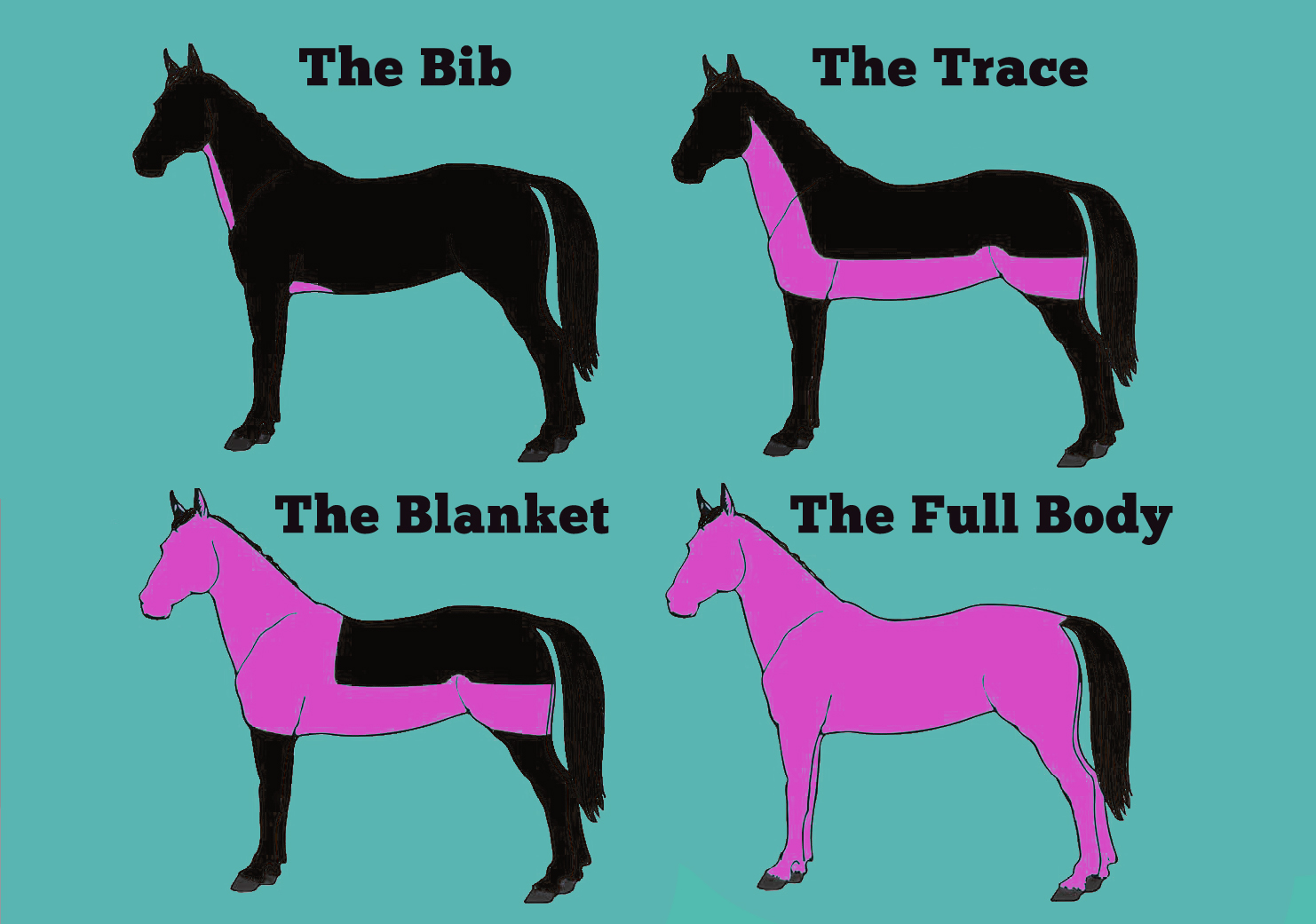
The Bib
This cut is ideal for the horse who lives out and has a light workload. Achieved by removing the hair from the front of the neck and chest, it can be extended for an even cooler effect by continuing the clip under the belly to where the girth sits.
The Trace
This cut is the next step up from the Bib and is best suited for a horse in light to medium work. This clip starts by removing your horse’s coat from the underside of the belly, chest, and neck, while leaving the hair on your horse’s head and legs.
The Blanket
This cut is named as it leaves the section of fur that would be covered by an exercise sheet. Ideal for a horse in medium work, but still has regular turnout, this is a crowd favourite. To achieve this cut leave your horse’s legs and the area where an exercise blanket would sit uncut while clipping the rest of your horse’s body and face.
The Full Body
This cut is exactly as it sounds and is a full clip where all the hair is removed from your horse’s body, legs, head, and ears. This is best suited for a horse that lives inside and has a heavy workload that is likely to induce heavy sweating. This clip is the most high maintenance of all the clips listed as it not only requires careful blanketing regimes, but increases your horses chances of having rain scald or mud fever due to the lack of winter coat that naturally protects your horse.