
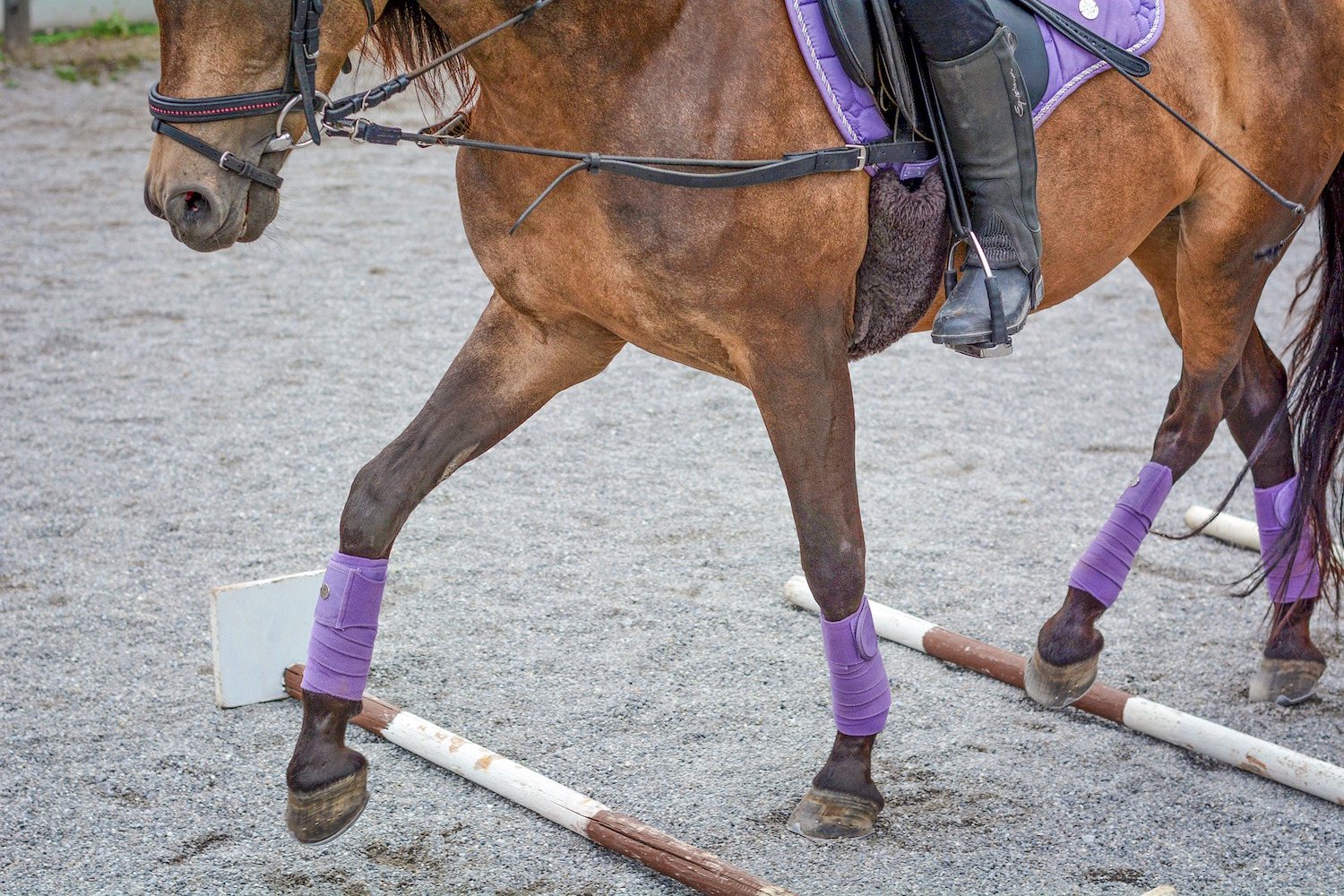
Polework can spice up your flatwork routine and is particularly beneficial for horses who need to focus on building strength, stamina, and fitness or who are coming back into work after a break or injury. Polework can be used in ground training or under saddle and is suitable for all levels of training.
Simple pole exercises can help develop your horse’s core stability while working their top line and improving their suppleness by encouraging them to engage their hindlegs.
In addition to the biomechanical benefits polework can provide it is also a handy tool to help influence your horse’s stride length and agility. Through basic exercises you can both lengthen and shorten your horse’s stride with minor adjustments to pole placement. This can be a great exercise for horses who tend to rush, have a shorter stride, or have an arrhythmic movement. By setting the poles further apart you can encourage them to stretch and open their frame. If you desire more collection in your horse’s stride you can shorten the distance between poles.
Polework promotes improved balance, control and steering. Requiring precision can help to refine your aids along with your horse’s reaction to those aids, which benefits everyday riding activities. These exercises require your horse’s focus on their movement and actions while requiring you to look up and ahead as you plan your route through the obstacles.
It can also help horses overcome poor or crooked posture when moving under saddle or on a lunge, and is often a great way to promote straightness and prevent stiffness or overbending.
The goal when riding or lunging over poles is to aim for the center of the pole. Sometimes having coloured or stripped poles can make this easier as it gives you a clear point of focus. When riding it is important to ensure your horse is between your leg and hand, and in front of your leg while being engaged and listening to you. You should be able to make minor adjustments and have your horse respond straight away.
There are endless opportunities with polework to create unique and new exercises through different shapes, lines, configurations, and pathways. We look forward to sharing some of our favorite schooling exercises in the coming weeks.