
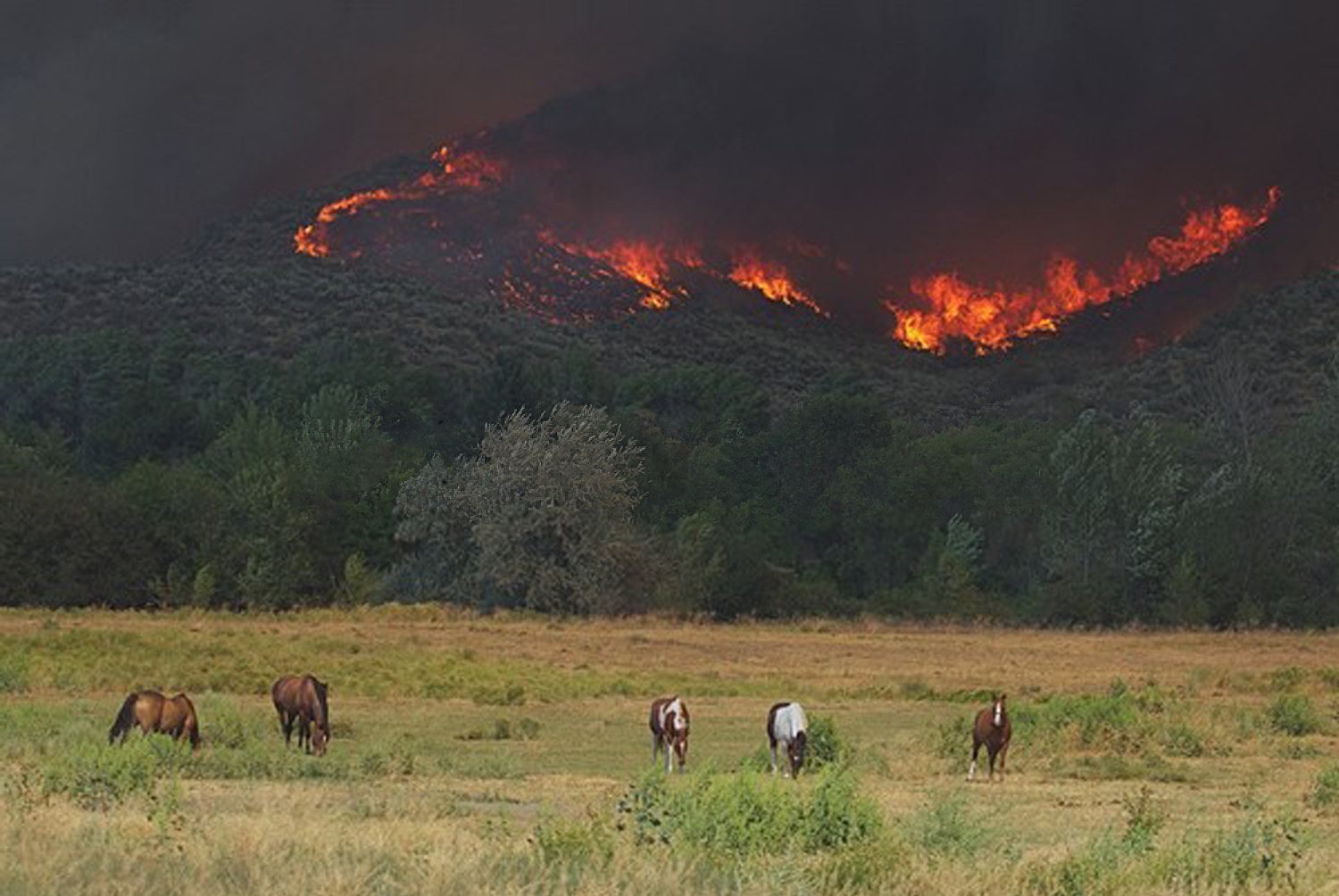
Fire is a fury of heat, light, and combustion that has the ability to flatten structures, destroy nature, and take lives at shockingly fast speeds. The thought of a fire in a horse barn or equestrian property is anxiety inducing nightmare fuel, and no horse owner ever wishes to experience the reality of it. But with temperatures rising, prolonged droughts, and wildfires on the rise across the U.S. how many of us are prepared, or have even considered a plan in case we need to evacuate our horses?
When a wildfire strikes time is often limited, and preparations made in advance can help you save the precious seconds needed to get to safety. Here are just a few things to consider when devising your individual evacuation plan:
Professional Help
While making your plan, be sure to seek out information regarding your area’s evacuation sites, protocol, and any information published by your local governing bodies pertaining to evacuations. Each locality will have different protocols, so don’t be afraid to reach out to your local fire safety officer for help and advice when devising your personal plan.
Equine Evacuation Kit/Supplies
When creating your horse’s evacuation kit, be sure to consider your horse’s needs for a 3-7 day time frame. You will want to ensure you have adequate food, water, and any medications that they require. You will also need buckets, grooming supplies, fly spray, an equine first aid kit, spare lead ropes and halters, and cleaning supplies. In addition to care items you will likely want to include copies of any other important documentation to help identify your horse in hard copy and/or USB (i.e. medical records, registration, microchip information, insurance, etc), and a list of emergency contact numbers (i.e. veterinarian, local animal control, animal shelters, boarding facilities, friends, family, neighbours, etc).
Communication
It is common for communication systems to become overloaded during a crisis, be sure to designate an out-of-area friend or relative as a point of contact in case of separation, or difficulties while trying to evacuate. They will be able to reach out to people on your behalf allowing you to focus on getting to safety.
Route
As part of your plan you will need to plan safe routes that could work in the case of an emergency evacuation. Grab your local resources, GPS, and maps to plan, and learn a few different routes that could help you safely evacuate in an emergency. Remember when selecting your routes you will want to consider the safety and suitability of each route. Getting your truck and trailer stuck will not only hinder your own evacuation, but may prevent others from getting to safety.
Trailering
Be sure your truck and trailer are regularly serviced, and in good working order in case of an emergency. Ensure your horses are well versed ahead of time with loading and unloading from the trailer, and keep in mind when loading and transporting horses in the midst of a wildfire it will likely require extra time, and you may have more horses than trailer space. To avoid running out of time, or having to leave horses behind, be sure to identify people who could help in emergency – this can include friends, family, and neighbours who own trailers, or have the ability to help you load horses; or professional haulers for hire, and emergency response teams who offer their services at short notice. Be sure to gather contact information for your evacuation kit, and talk over your final plan with anyone you decide to delegate as a potential emergency contact in the case of a wildfire.
Identification
Identification is paramount to ensuring your horse is identifiable, and will be the key to reuniting you should you become separated. Consider microchipping your horse before an emergency hits (read more about microchips here), and make sure your contact number is located either on an ID tag braided into your horse’s mane, written on your horse’s coat with a livestock safe paint/crayon, or even clipped into your horse’s coat if there is time.
Last Resort
Your personal safety is paramount, and there may be cases where despite your best efforts to plan you may be unable to evacuate your horses, and will be forced to leave them behind. In cases where evacuation is not possible if there is time it is best to let the horses loose and not leave them confined in a stall or pasture. Remember to close any doors or gates to avoid them being able to re-entering the areas of confinement.